

The Crumbles journal
Crumbl or crumble: the American cookie brand versus the English dessert
Two words one letter apart, two very different worlds. On one side “Crumbl”, the American chain of giant cookies from Utah. On the other “crumble”, the British fruit dessert topped with a crumbly crust. Here is what sets them apart, why they get confused, and where to enjoy a real crumble in Paris.
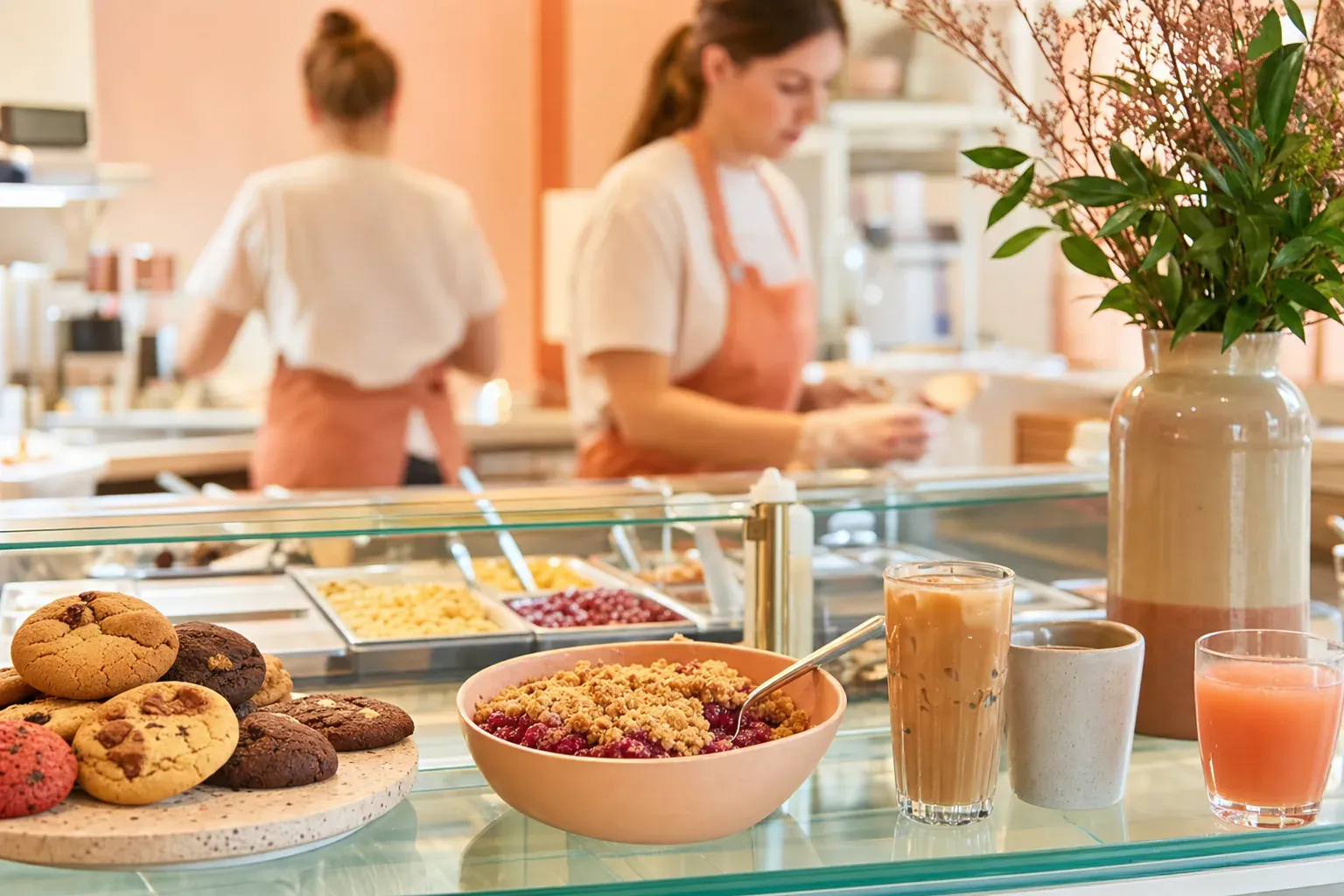
Search for “crumbl” and you get an odd mix: thick cookies in pink boxes, American-style queues, but also recipes for apple dessert under a golden crust. Two very different realities hide behind nearly identical words.
“Crumbl” (no final “e”) is a brand name, an American cookie chain. “Crumble” (with “e”) is a common noun, a traditional English dessert. This is not another history of the crumble (told elsewhere): it is the guide that clears up, once and for all, the mix-up between the brand and the dessert.
Crumbl: the American cookie chain
Crumbl (“Crumbl Cookies”) is an American chain founded in 2017 in Logan, Utah, built around one obsession: the perfect thick, gooey cookie in a generous format. It grew fast into a phenomenon with hundreds of locations across the United States.
Its signature is a menu that rotates every week rather than a fixed list — chocolate, cookie-dough, fruit and dozens of other flavours cycling through. It keeps a constant sense of novelty and brings customers back for the current batch.
The other pillar is franchise and branding: the pink box, cookies shot from above, tasting videos built for TikTok and Instagram. The key point: Crumbl is a cookie, sold by the unit — not a fruit dessert, not a crumbly topping over apples.
The Crumbl brand at a glance
Origin
Founded in 2017 in Logan, Utah (USA).
Product
Thick, generous cookies sold by the unit.
Menu
A flavour selection that changes weekly.
Model
American franchise, strong social presence.
The crumble: the English fruit dessert
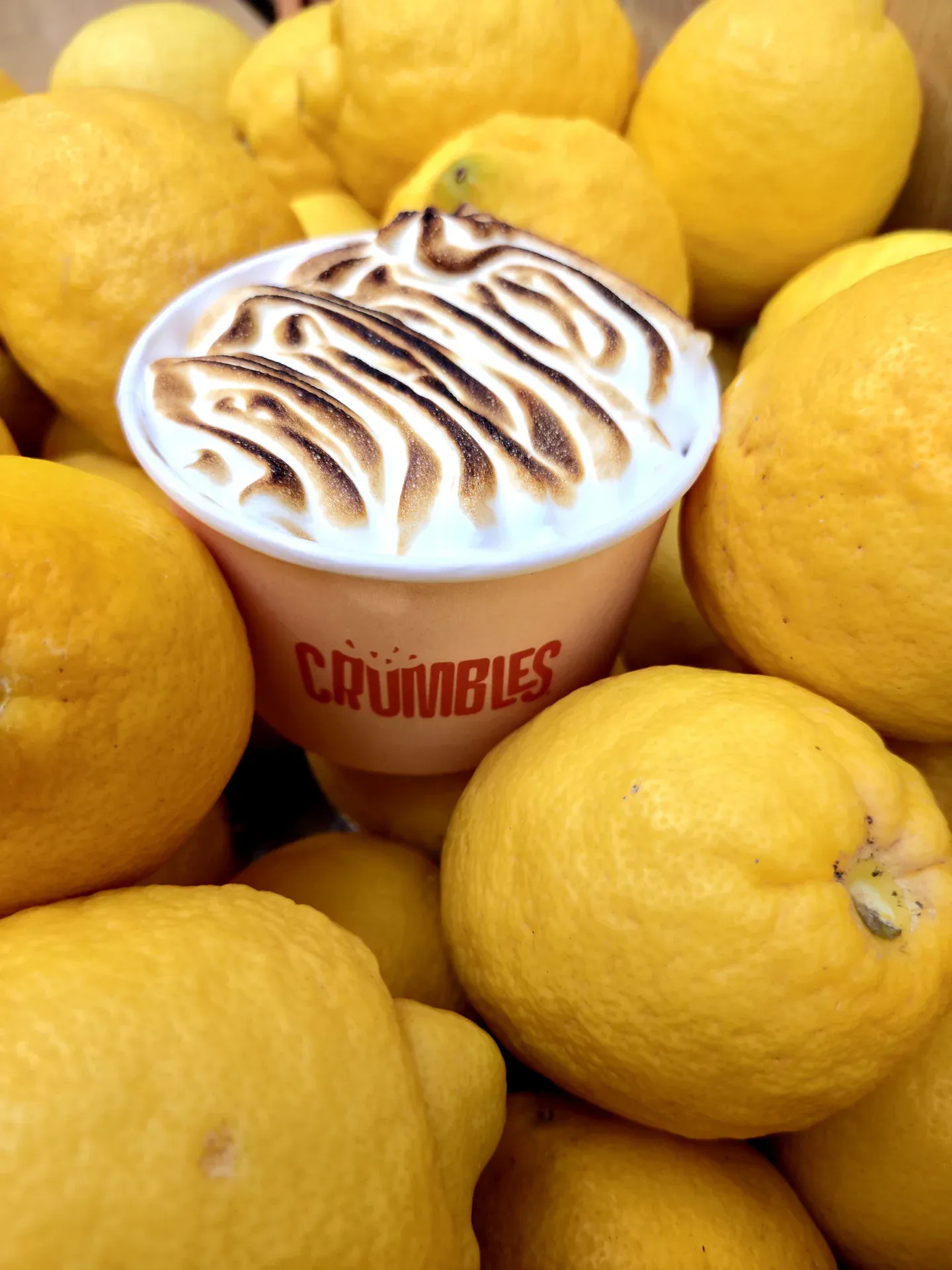
The crumble is not a brand but a dessert — a British one, born in the mid-20th century. The idea is simple: fruit (apples, pears, rhubarb, berries) topped with a sandy mix of flour, butter and sugar, then baked until the top turns golden and crumbly. “To crumble” means to break into small pieces.
What defines a crumble is a contrast: soft, slightly tart fruit under a crisp, buttery crust. It is traditionally served hot with custard, cream or vanilla ice cream — a seasonal, comforting dessert, far from a takeaway cookie.
The full history of the crumble, and its cousins the crisp and cobbler, are covered in a dedicated article. The essential point: the crumble is a fruit dessert under a crumbly topping, not a branded cookie. Read the origin of the crumble.
Crumbl vs crumble: the comparison
At a glance, the main differences between the American brand and the English dessert.
| Crumbl (the brand) | The crumble (the dessert) | |
|---|---|---|
| Nature | Food chain, brand name | Traditional dessert, common noun |
| Origin | Utah, USA, 2017 | United Kingdom, mid-20th century |
| Base | Cookie dough baked thick | Crumbly shortcrust over fruit |
Why the confusion exists
The mix-up is no accident. First, spelling: a single letter, the final “e”, separates the two words. Many people looking for crumble recipes type “crumbl”, and vice versa.
Then pronunciation: “Crumbl” and “crumble” sound almost the same, especially to a French ear, since the final “e” is barely heard in English.
Finally, social media blurred the line. Crumbl exploded on TikTok and Instagram, spreading the word far beyond the US — so in France, where the brand isn’t present, many meet the name and link it to the crumble they already know.
How to pronounce them
Good news: pronunciation barely tells them apart — which is exactly why they get confused.
Crumbl (the brand)
Pronounced the English way, roughly “krum-buhl”, swallowing the end.
Crumble (the dessert)
Same sound, the final “e” staying almost silent.
To the ear, almost nothing separates them. The real difference is in writing and meaning: a brand on one side, a dessert on the other. Context does all the work.
Is Crumbl in France?
To date, the Crumbl chain is not present in France: no shop in Paris or elsewhere. The giant-cookie, pink-box phenomenon remains mostly North American. Searching for “Crumbl Paris” won’t find the American brand.
What you can find in Paris is a real crumble — the dessert. The city now has its first bar entirely dedicated to it: homemade, made to order, rooted in a neighbourhood — the opposite of a standardised franchise cookie.
A homemade cookie-style crumble?
Since everyone has Crumbl in mind, one question comes up: can you make a crumble at home that plays on the “cookie” register? Yes — as long as you know what you borrow from each.
A crumble base (flour, butter, sugar rubbed into crumbs) isn’t far from cookie dough. For a richer topping, add brown sugar, a pinch of salt, chocolate or toasted hazelnuts, just as you would flavour a cookie.
The golden rule: keep fruit under the crust. That soft-tart, crisp-buttery contrast is what makes a crumble rather than a biscuit. If you’re starting out, follow a step-by-step composition guide. Follow the guide to build your crumble.
Where to find a real crumble in Paris
Now that Crumbl and crumble no longer blur together, you may want to taste a real crumble, not a cookie. In Paris that means the city’s first crumble bar, a concept fully dedicated to the dessert, with a neighbourhood coffee-shop feel.
The opposite of a chain: nothing is industrial, everything is made to order. You choose your fruit, base, toppings and crunchy finishes, and leave with a crumble assembled on the spot — homemade compote, hand-worked pastry, seasonal fruit.
You can pair it with a specialty coffee. Where Crumbl sells a standardised cookie, this crumble bar champions freshness, season and personal composition. The best way to settle the “crumbl or crumble” debate is to taste a real one.
Frequently asked questions
FAQ
Does Crumbl exist in France?
No. The American Crumbl chain is not present in France — no shop in Paris or elsewhere. You can, however, find real crumbles, the English fruit dessert, notably at the city’s first crumble bar.
Is a crumble the same as a cookie?
No. A cookie is a baked biscuit sold by the unit. A crumble is a dessert: fruit under a crumbly topping, served hot. They share base ingredients but not shape, texture or use.
How do you pronounce “crumbl” and “crumble”?
Almost identically, the English way, roughly “krum-buhl”, with a near-silent final “e”. That near-homophony explains much of the confusion.
Where does the Crumbl brand come from?
Crumbl (Crumbl Cookies) was founded in 2017 in Logan, Utah, USA, growing as a franchise around thick cookies and a weekly rotating menu, with a strong TikTok and Instagram presence.
Is the crumble an English dessert?
Yes. It is a British dessert from the mid-20th century: fruit under a baked crumbly mix of flour, butter and sugar, served hot. Its full history is told in our dedicated article.
Can you make a cookie-style crumble at home?
Yes. Enrich the topping with brown sugar, salt, chocolate or hazelnuts for a more “cookie” feel — but keep fruit under the crust: that contrast is what makes a crumble.
Going further
You can now tell them apart: Crumbl the cookie brand, and the crumble the dessert. To move from theory to tasting, come build your own at crumbles paris, the city’s first crumble bar, where every crumble is assembled to order with seasonal fruit.