

Green cardamom
The signature spice: fresh, minty, citrusy notes that define chai.
The journal's first drinks piece: we leave the crumble aside to unpack the chai latte, the spiced milky drink that took over coffee shops. Origins, spice blend, variants like the dirty chai, home brewing and how to spot a good one at the counter.
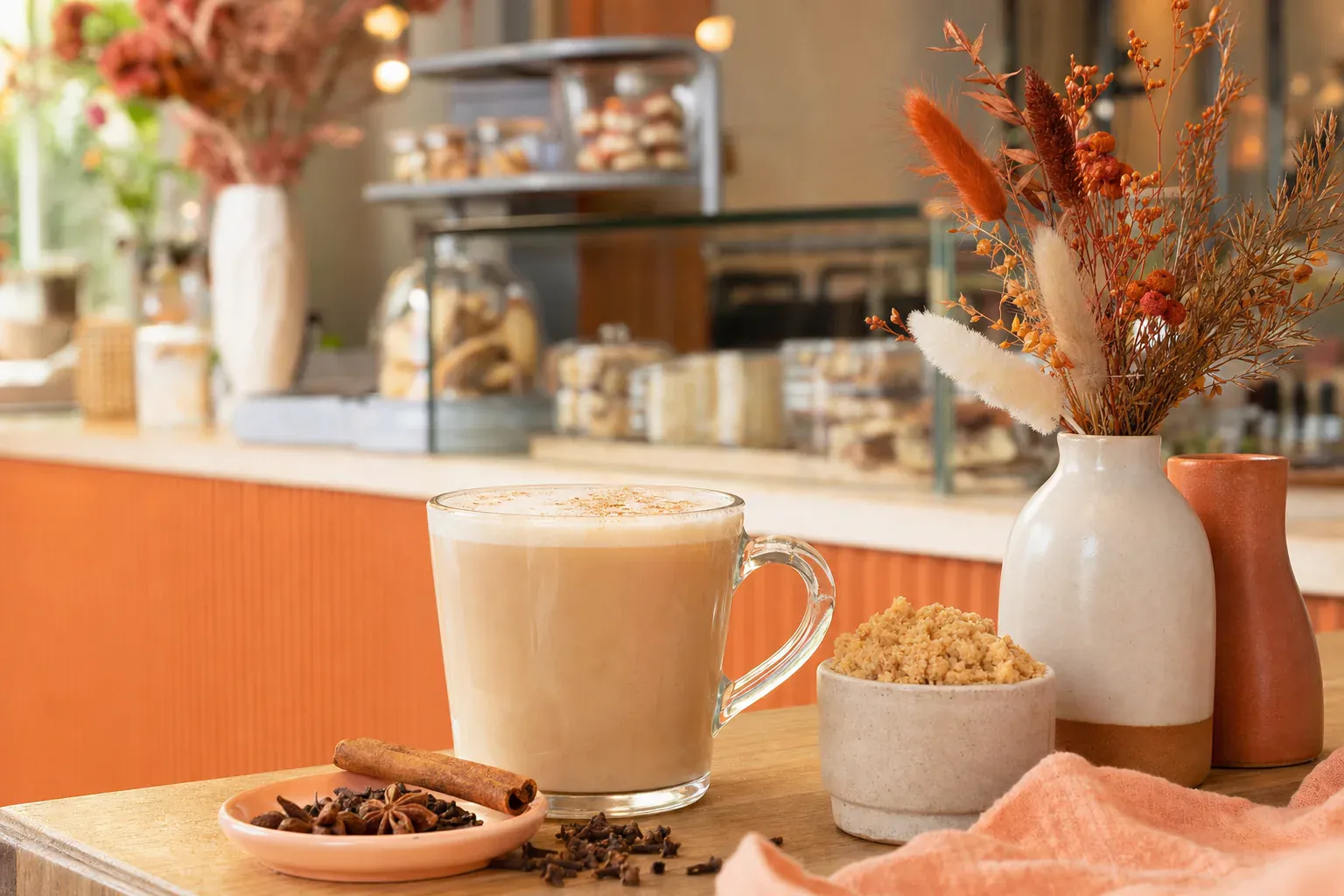
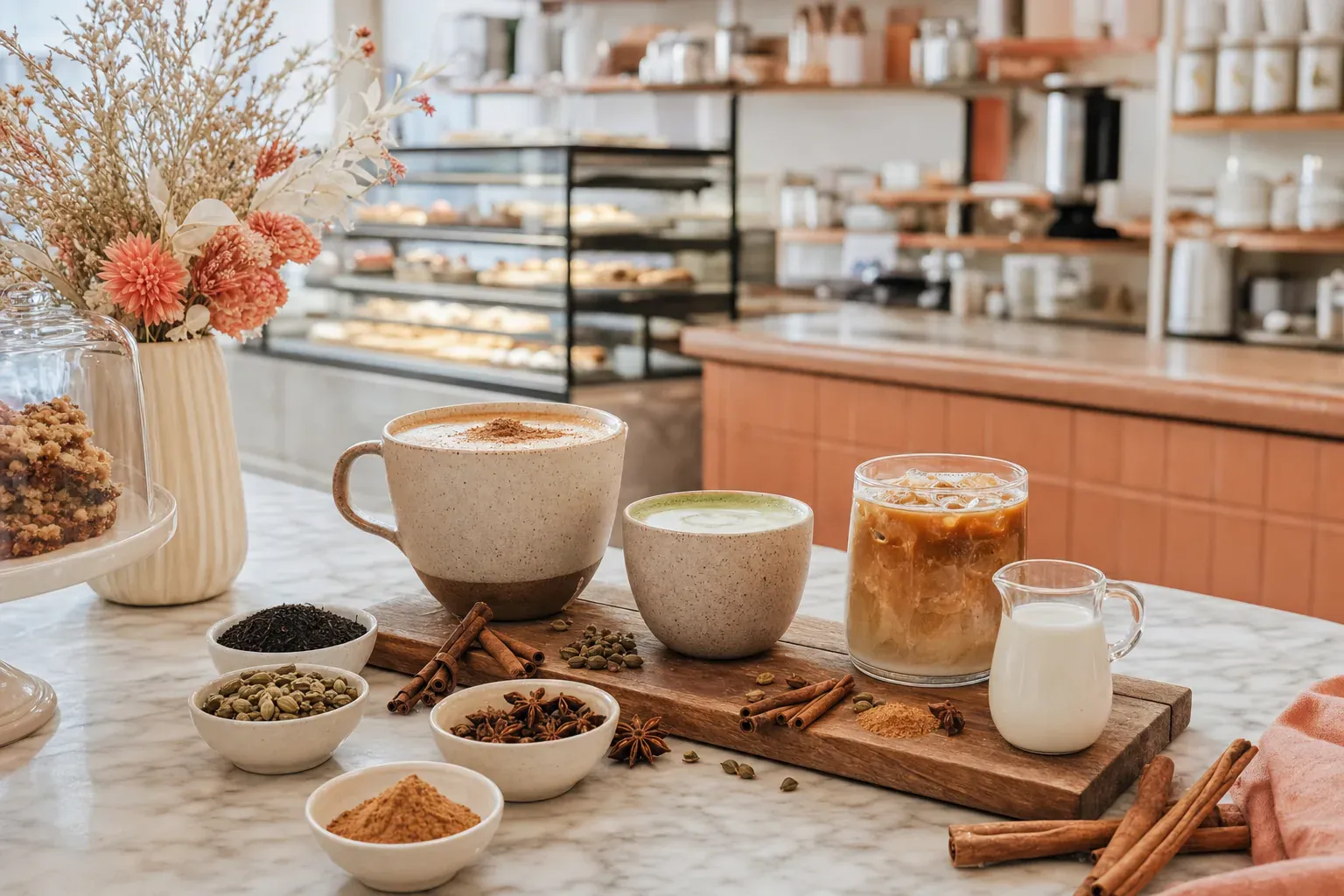
Basics
In Hindi, “chai” simply means “tea”, so “chai tea” literally says “tea tea”. What the West calls chai is really masala chai: a spiced milky tea simmered with black tea, milk, sugar and spices.
The chai latte is the coffee-shop adaptation: milkier, often sweeter, topped with foamed milk. It brings together a chai base (brewed tea and spices, or a concentrate/syrup/powder), hot milk and a foamed finish.
The heart of it
There is no single recipe, but a core of spices comes back almost every time. Here are the six pillars.
The signature spice: fresh, minty, citrusy notes that define chai.
Round warmth and woody sweetness without added sugar.
Lively heat and a gentle bite that wakes the blend up.
Powerful and deep, used sparingly for that classic masala depth.
Subtle but essential, it extends the ginger warmth.
An aniseed note that rounds it off with a soft finish.
Chai is all about dosage: too much clove turns it harsh, too much sugar hides the spices. A robust black tea (often Assam) holds everything together.
Variations
Once the base is mastered, the chai latte lends itself to many variations.
A dirty chai is a chai latte with a shot of espresso (two shots = a filthy chai). The coffee cuts through the spiced sweetness and adds caffeine.
Vanilla softens the chai and makes it more dessert-like. You will also find honey, maple and iced chai lattes for summer.
Chai pairs beautifully with plant milks. Oat milk is often the favourite: creamy, naturally sweet and easy to texture without hiding the spices.
At home
Three methods exist, from the most authentic to the fastest. The first gives the best result.

By infusion (traditional)
Simmer whole crushed spices, add black tea, then milk and sugar. The most aromatic way.
By concentrate or syrup
A chai concentrate topped with steamed milk. Quick and consistent, common in coffee shops.
By powder
Instant chai powder in hot milk. The express option, usually the sweetest.
Step-by-step home recipe (infusion)
Adjust to taste: more ginger for bite, more cinnamon for sweetness, less sugar to let the spices sing.

At the counter
First question: is the chai house-made or from an industrial syrup? A house chai or quality concentrate gives lively spices and controlled sugar.
Then check the milk (steam-textured) and the availability of well-worked plant milks. Balance is key: every spice should show without sugar taking over.
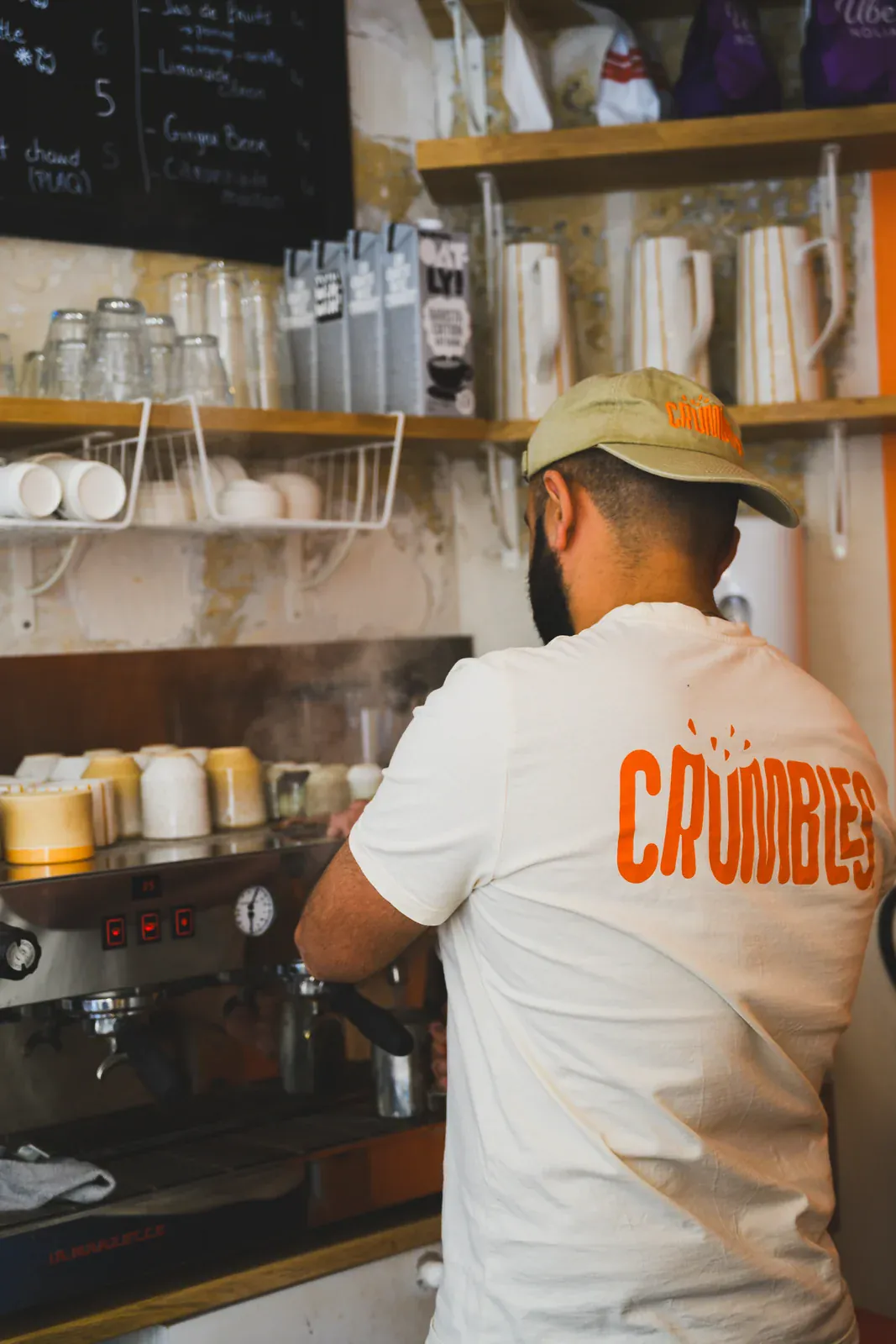
That is exactly the care we put behind the counter of our SoPi coffee shop at Crumbles — the same attention as for our made-to-order crumbles.
The recurring question
Yes, a chai latte has caffeine from the black tea, but less than an espresso — roughly a third to half of a filter coffee.
A dirty chai adds more via espresso; rooibos-based versions have none. A chai can also be made with no added sugar.
The vocabulary
“Chai” means tea in Hindi; “masala chai” is spiced Indian tea; “chai tea” is a pleonasm; “chai latte” is the milky coffee-shop version.
Versus a matcha latte: matcha is powdered Japanese green tea, vivid and herbal, no spices — the opposite profile to the amber, spiced chai.
The treat
Chai's warm spices — cinnamon, cardamom, clove — are exactly those that lift a fruit crumble. A chai latte next to an apple-cinnamon crumble is almost autumn in a hand.
Tart fruit crumbles balance the milky roundness; pear-vanilla extends its sweetness. Add a pinch of sweet spice to your crumbling for the perfect bridge.
Build your crumble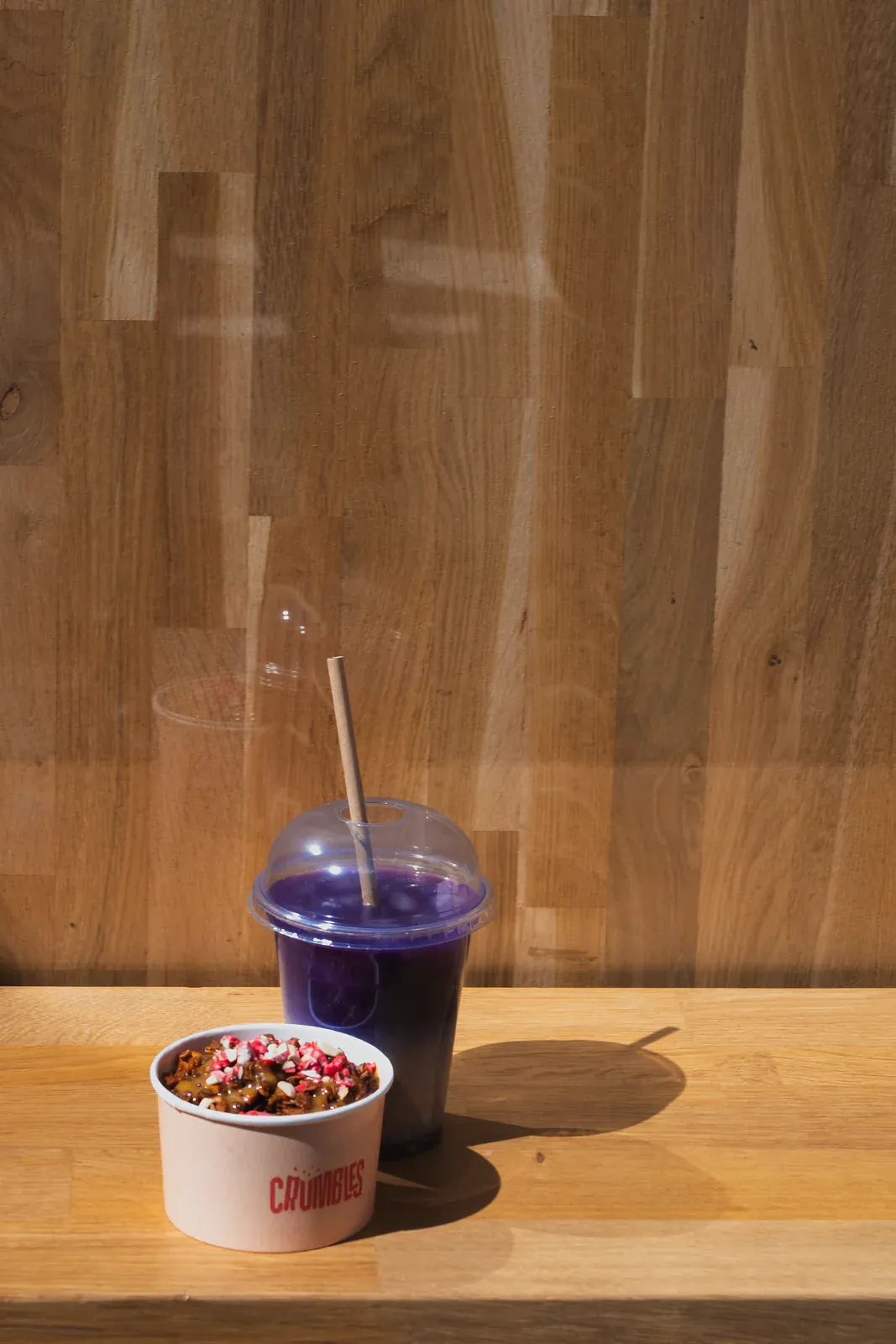
FAQ
Yes, from the black tea, but less than an espresso — about a third to half of a filter coffee. A dirty chai has more; rooibos versions have none.
“Chai” means tea; “masala chai” is spiced Indian tea; “chai tea” is redundant; “chai latte” is the milky coffee-shop version.
Chai is amber, spiced black tea; matcha is vivid, herbal powdered green tea with no spices. Opposite profiles.
Yes. Cinnamon and vanilla bring natural sweetness, so added sugar can be reduced or removed, especially with a house-brewed chai.
Oat milk is a favourite — creamy and lightly sweet. Whole milk is the richest, almond lighter, soy neutral.
House chai or quality concentrate over sweet syrup, well-textured milk, and a balance where every spice shows without sugar dominating.
Explore next
This drinks article from the Crumbles journal is written from our coffee shop in Pigalle, au 3 rue Pierre Fontaine, à Paris 9. To read on about the address, discover our coffee shop paris 9.