

An SCA score of 80+ and cupping by Q-graders
Certified tasters score coffee in a standardised cupping; 80 points and above means specialty.
"Specialty coffee" is on every chalkboard in Paris. But what does it actually guarantee?
From the Crumbles counter, which serves coffee from a Paris roaster, here is what the label means and how to recognise a serious spot.
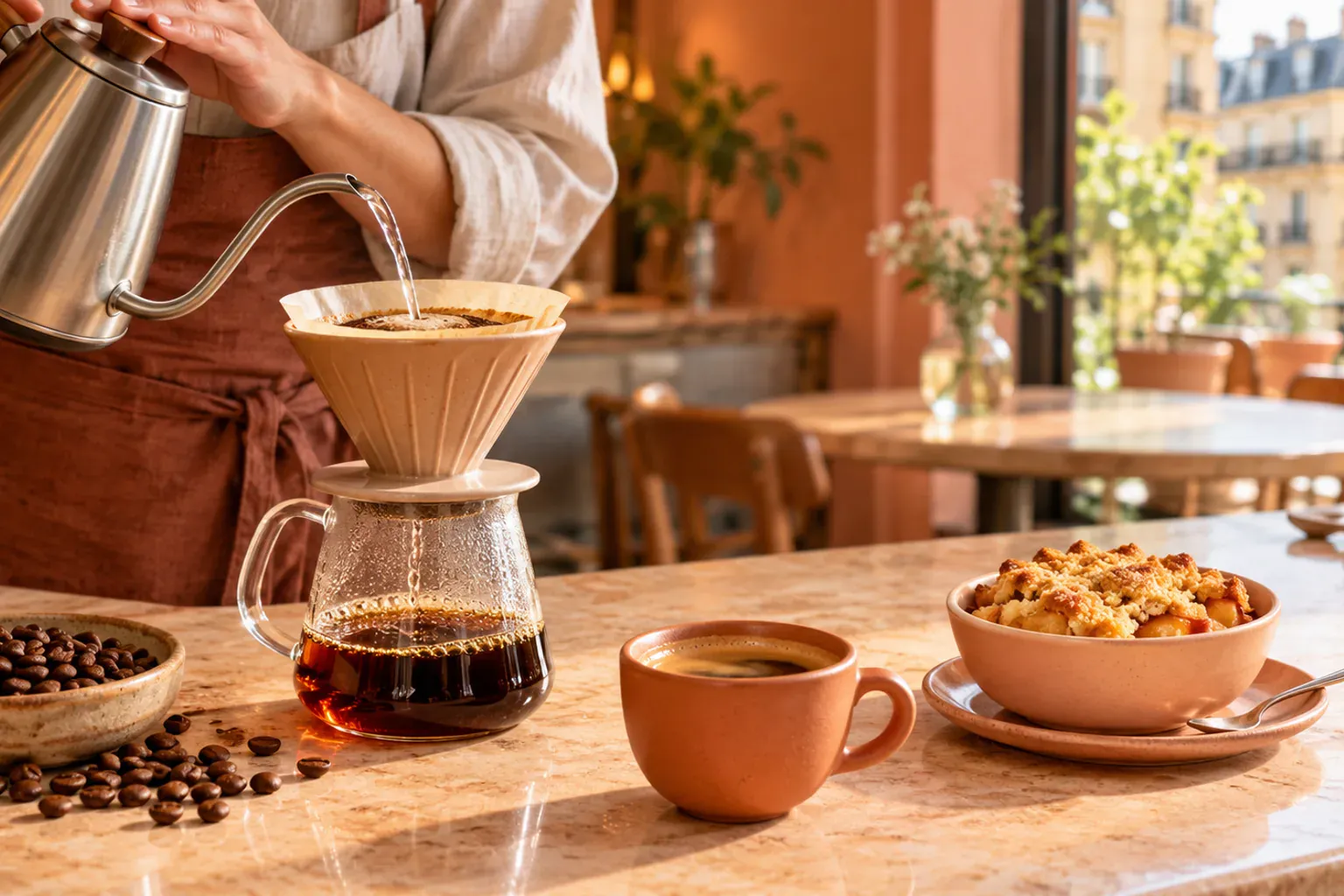
The basics
The term refers to a grading scale set by the Specialty Coffee Association, applied to green coffee.
Certified tasters score coffee in a standardised cupping; 80 points and above means specialty.
No black, mouldy or badly insect-damaged beans, and only a handful of minor defects.
Industry estimates often cite roughly 10%, depending on sources: it takes the right variety, altitude, harvest and sorting.
The label describes the raw material; roasting and brewing still make or break the cup.
The comparison
Criterion by criterion, here is what changes.
| Criterion | Specialty coffee | Regular coffee |
|---|---|---|
| Origin | Traceable to lot or farm | Anonymous blends |
| Roast | Light to medium, recent | Often dark, industrial |
| Freshness | Roast date shown | Best-before date only |
| Taste | Acidity, fruit, sweetness | Dominant bitterness |
| Price | Higher, pays for quality | Lower, volume logic |
Most specialty coffees are arabica, the more aromatic species; robusta is more bitter with about twice the caffeine.
"100% arabica" does not mean specialty: quality is measured, not assumed from the species.
Roasting
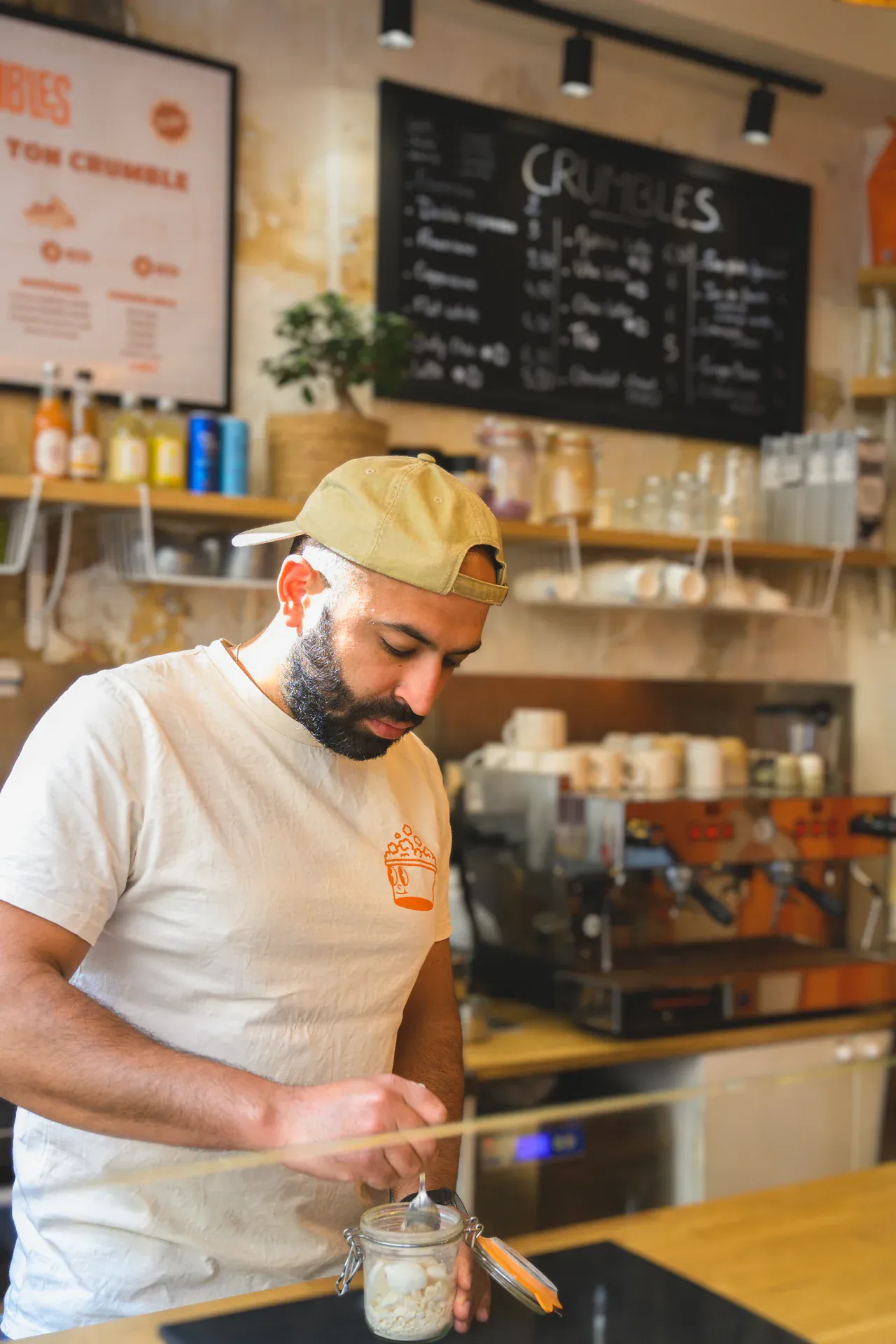
Roasting turns green beans into aromatic coffee; a lighter roast preserves origin flavours.
A local roaster means freshness, profiles tailored for espresso and filter, and a direct relationship.
At Crumbles we work with Tanat Coffee, a Paris roaster, with arrivals changing with the seasons, served in our 9th arrondissement coffee shop.
Brewing
Brewing is the final link: grind, dose and extraction make the difference.
Dose, ratio and time are dialled in daily; crema signals freshness, balance signals quality.
Gravity brewing through a coarser grind reveals fruity and floral notes best.
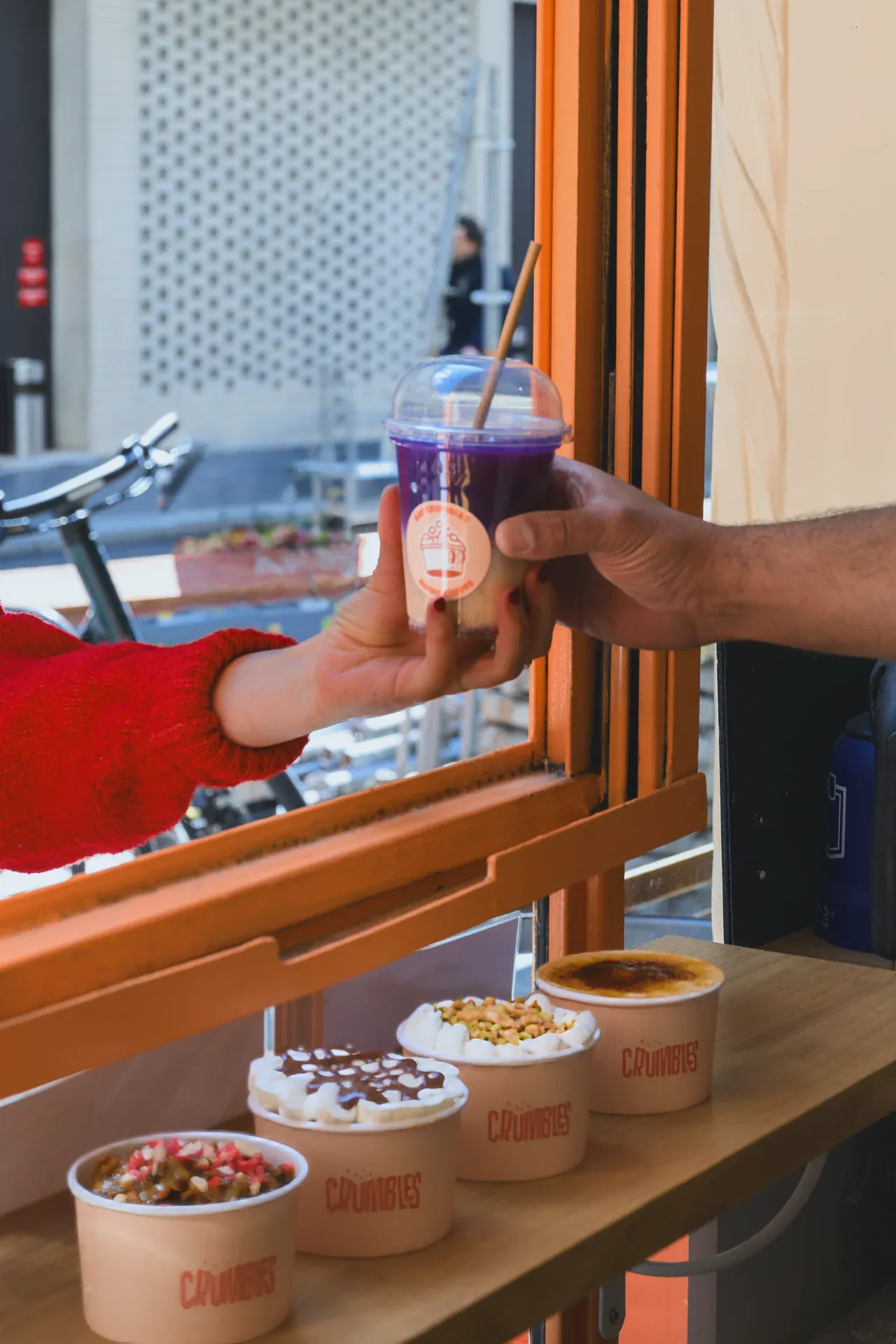
Yes: a good base still comes through the milk, sweeter and less bitter. Same care goes into our house lattes, like our ube latte in Paris.
Looking for a coffee-free option? Try the chai latte with the same logic.

Field guide
Seven simple signs visible from the counter.
Origin displayed
The coffee has an identity.
Roast date
Specialty is drunk fresh.
Roaster named
Proud of where it comes from.
Grinding to order
Ground just before brewing.
Choice of methods
Espresso and filter.
A barista who explains
Plain-language tasting notes.
Well-worked plant milk
Oat milk textured with care.
Your taste
Origins suggest broad tendencies, not rules.
Common tendency: Ethiopia, Kenya
Citrus, red fruit and floral notes; great as filter.
Common tendency: Brazil, Colombia
Cocoa, hazelnut, caramel; great as espresso or latte.
For pairing with a dessert, read which drink goes with a crumble.
Fair price
The extra cost is spread along a more demanding chain, from farm to cup.
Producers
Hand-picked ripe cherries, better paid when better graded.
Sorting
Removing defects takes time and labour.
Craft roasting
Small batches and tailored profiles.
Baristas
Training and daily dialling-in.
Paying a little more funds a model where quality is rewarded at each step.
The neighbourhood
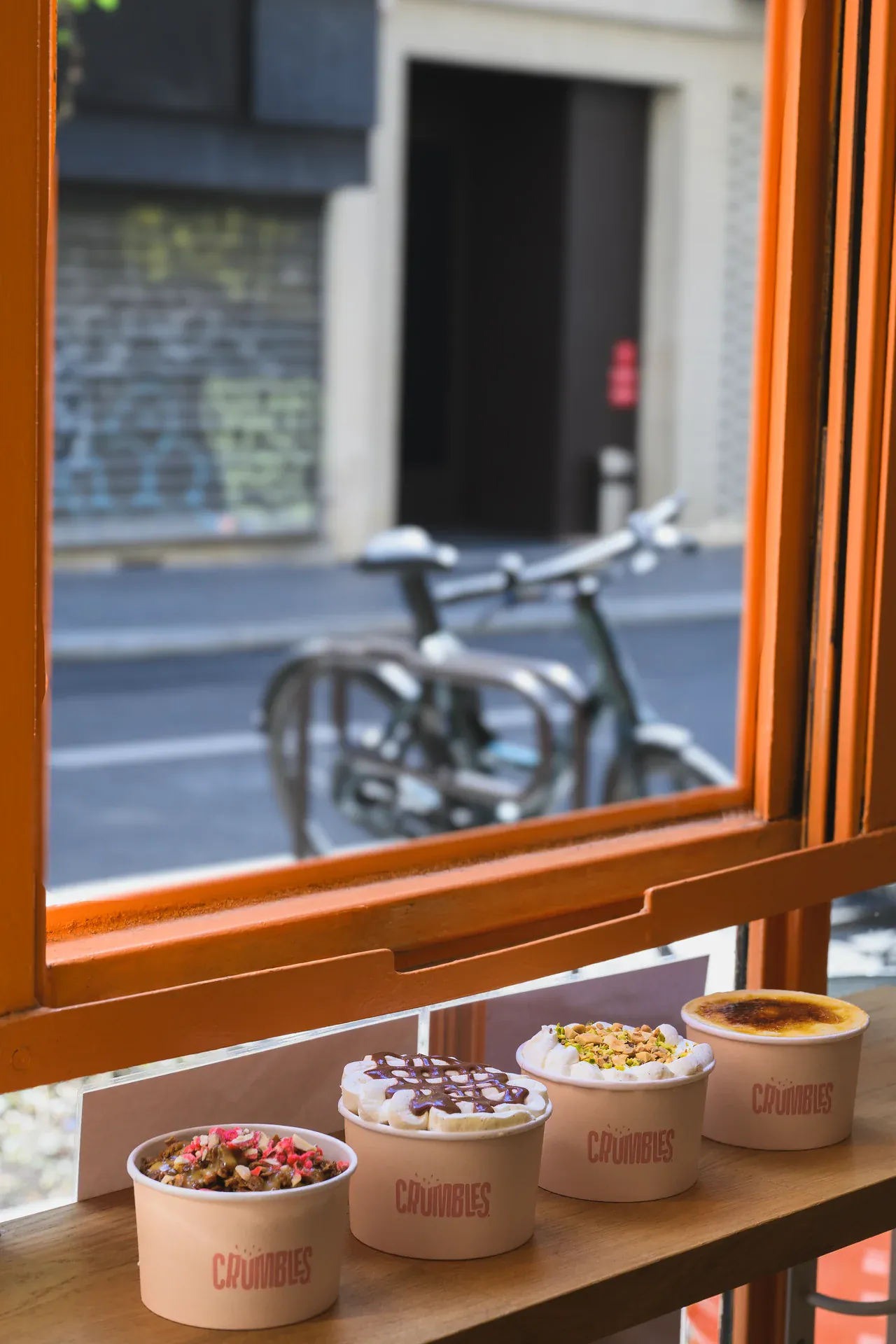
SoPi has become one of Paris’s coffee neighbourhoods, between rue des Martyrs and lower Montmartre.
Crumbles sits at 3 rue Pierre Fontaine, serving Tanat coffee with a crumble made to order.
Learn more on our coffee shop Paris 9 page, or as a coffee shop in Pigalle. For an afternoon break, see our afternoon snack guide too.
FAQ
Coffee scoring 80+/100 in an SCA cupping with zero primary defects, traceable and carefully roasted and brewed.
No. The SCA score measures taste quality and defects, not farming method.
Whole beans are best after a few days’ rest and in the following weeks, often around a month. Grind just before brewing.
Not really: caffeine depends mostly on species, and most specialty coffee is arabica.
Yes: a V60, French press or Aeropress, fresh beans and a scale are enough.
Single origin means one source; specialty is defined by its cupping score. They can overlap but are not the same.
Explore next
Going further
This Crumbles journal article is written from our SoPi counter. To discover the address, visit our coffee shop paris 9 page.